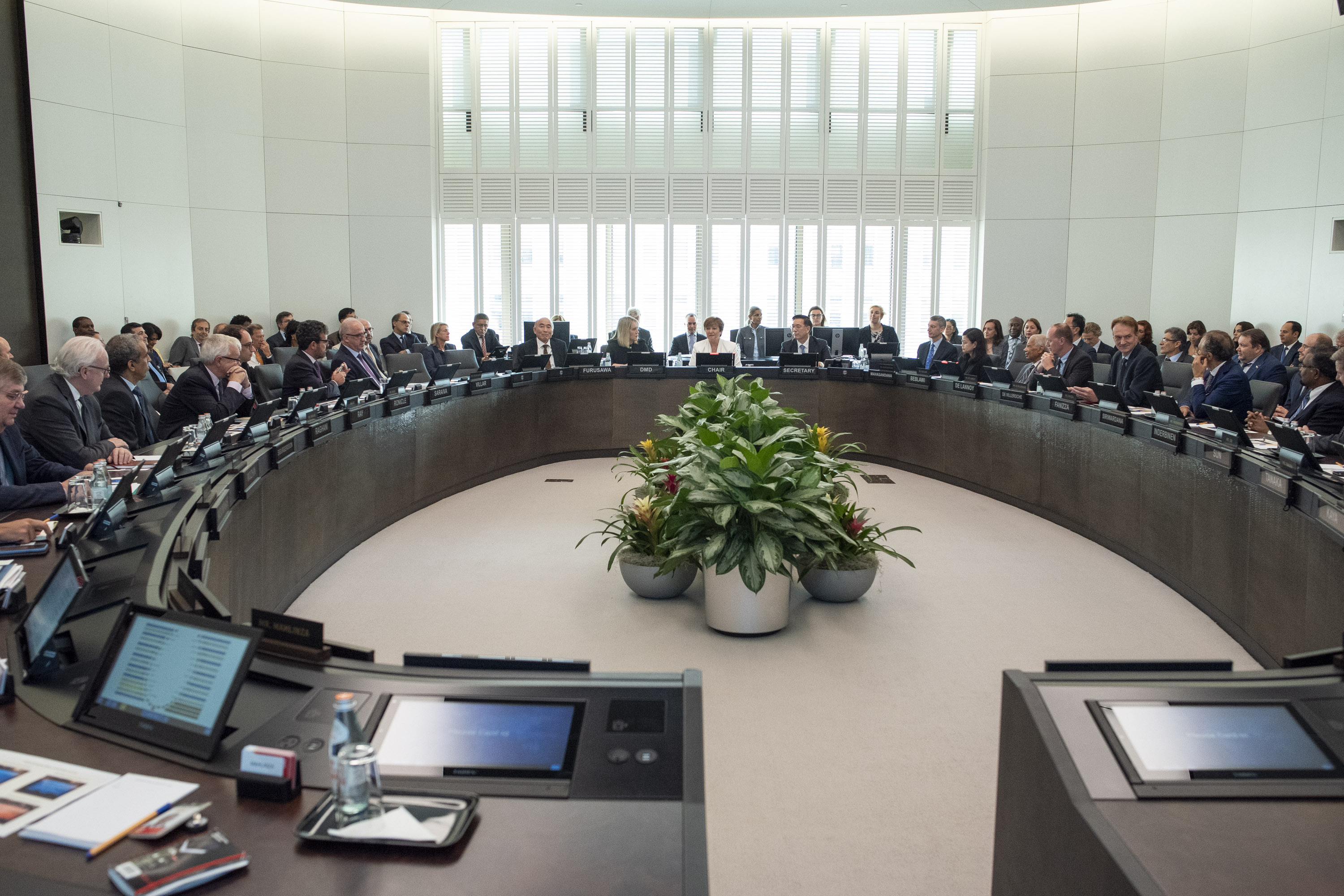
IMF Executive Board Approves Extended Credit Facility Arrangement for Sudan
IMF News, June 29, 2021
Source details
- Canonical URL
- IMF Executive Board Approves Extended Credit Facility Arrangement for Sudan
Other formats
Bibliographic details
- Published: June 29, 2021
Board decision and financing package
- Executive Board approved a 39-month Extended Credit Facility (ECF) arrangement for Sudan in the amount of SDR1,733.051 million (about US$2,472.7 million or 275 percent of quota).
- The decision enables an immediate disbursement equivalent to SDR 991.551 million (about US$1,414.7 million).
- The three-year financing package is intended to support implementation of the authorities’ transformational reform agenda and to catalyze concessional donor financing.
Objectives and intended outcomes
- Support the authorities’ implementation of their ambitious reform agenda anchored between the Heavily Indebted Poor Countries (HIPC) Decision and Completion Points to support inclusive growth and poverty reduction.
- Help Sudan build greater economic resilience, promote higher and more inclusive growth, and reduce poverty and raise living standards.
Key policy and reform priorities (from the ECF and Ms. Georgieva’s statement)
- Strengthen public finances and target social safety nets; reduce spending on regressive and distortionary energy subsidies while channeling new resources toward social and infrastructure spending.
- Increase domestic revenue through additional tax measures and administrative improvements, including public financial management (PFM) reforms and actions to strengthen the Large Taxpayer Office.
- Improve debt management to avoid re-accumulation of unsustainable debt.
- Increase central bank independence and supervisory capacity; enact a revised Banking Regulation Act including a comprehensive resolution regime for the banking sector in line with international best practice.
- Implement a dual banking system and re-introduce conventional banking to foster development of more effective monetary instruments.
- Support exchange rate flexibility and adoption of a reserve money targeting regime; guard against reemergence of multiple currency practices.
- Improve governance to foster private sector-led growth: reduce the role of the state, mobilize private investment, establish an independent Anti-Corruption Commission, and design a strategy for the SOE sector to determine privatization and state retention decisions.
- Complete and implement a Poverty Reduction Strategy Paper (PRSP) reflecting stakeholder consensus on a national roadmap to alleviate poverty and identify priority sectors for progress toward the Sustainable Development Goals (SDGs).
- Increase international community provision of financial and technical assistance to support reforms and PRSP implementation.
- Sudan’s request for interim HIPC Initiative assistance on the debt service due to the Fund has been approved; progress in securing commitments from other creditors for HIPC debt relief is noted as welcome.
Recent economic developments (Annex)
- The economy contracted for a third consecutive year in 2020, though less than expected; growth is expected to pick up gradually starting in 2021 as economic stability is restored.
- Fiscal deficit has come down and is expected to narrow further in 2021, facilitating a reduction of inflation, but both it and the current account deficit remain large.
- Inflation is very high: 379 percent y/y in May 2021.
- Competitiveness is weak.
- Policy actions taken: removal of retail gasoline and most fuel subsidies in December 2020; electricity tariffs increased; progress on bank stress tests and AML/CFT inspections of banks.
Program summary (reform focus areas coordinated with donors and HIPC floating Completion Point triggers)
- Fiscal sustainability via increased domestic revenue mobilization and reduced expenditure on regressive energy subsidies.
- Increase spending on health, education and other critical services to improve living standards and raise long-term growth.
- Support exchange rate flexibility and adoption of a reserve money targeting regime.
- Increase central bank independence, strengthen the financial sector by implementing a dual banking system, and reform the bank resolution regime.
- Strengthen governance and transparency, especially in the SOE sector.
IMF Press Release No. 21/198 — June 29, 2021 — IMF Communications Department